Air Purifier for Bird Owners

Why is Clean Air important for Your Bird
• Birds generate a fair amount of feather dust and dander which interferes with their ability to breathe comfortably indoors.
• Bird’s respiratory systems are extremely delicate. This means that common toxins, chemicals and particles in the air are more harmful to their health.
• The pre-filter should be cleaned every 1-2 weeks due to increased feather dust and dander, varying by bird breed. Refer to the maintenance page for cleaning instructions.
In The News

"The best air purifier for pets...The Rabbit Air A3 earned a 5/5 for effectiveness"

"Throughout our testing, this purifier effectively and quietly improved air quality by clearing pollutants out of the air"

"The best air purifier for pets needs to pack all the allergen-targeting power into one comprehensive filtration package — enter Rabbit's A3 Ultra Quiet Air Purifier."

"Best Air Purifier For Pet OdorComes Outfitted With An Odor-Removing Filter"

"Whether you’re looking to tackle pet hair, dander, or odor, the Rabbit Air MinusA2 Ultra Quiet Air Purifier will get you the cleanest air possible"
Why does an indoor bird need an air purifier?
The importance of clean air is often underestimated. Parrots tend to live in environments with dynamic weather conditions, which help regulate air quality. Unfortunately, indoor environments rarely approximate a bird’s natural habitat. Rabbit Air purifiers trap feather dust, adsorb chemical substances, and capture particles ensuring that the air is clean before it reaches your bird’s lungs.
From Our Customers
I purchased this because I saw it in Bird Talk magazine. It works great. I noticed I don't have dander on my reading glasses anymore.
Robert K.
Rabbit Air Purifier Owner
I am owned by 12 Birds & I would recommend buying a Rabbit air even if you don't have pets. The best money I've ever spent. Hands down the BEST!!! Air filter ever.
Online Shopper
Rabbit Air Purifier Owner
I have parrots with powder-producing feathers. I am happy with the performance. No more feather dust all over everything.
N. Tupper
Rabbit Air Purifier Owner
I have spent nearly two thousand dollars on different air cleaners over the past ten years. They all proved to be ineffective, noisy, ugly, and/or overpriced. Rabbit Air works for me. None of the others did.
Charles C.
Rabbit Air Purifier Owner
I can't believe it, within a day, the room with the birds smelled and felt cleaner. We have eight parrots and it was so dusty in there. Now it is wonderful!
Online Shopper
Rabbit Air Purifier Owner
Shop our Air Purifiers


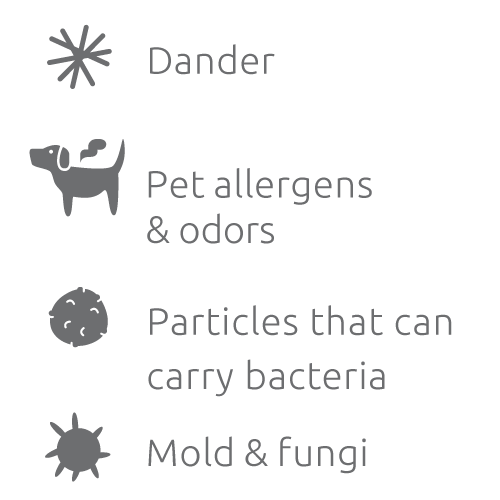
What Rabbit Air removes



- large particles
- dust mites
- pet hair
- pollen
- dander
- pet allergens and odors
- particles that can carry bacteria
- mold and fungi
- large particles
- dust mites
- pet hair
- pollen
- particles that can carry viruses
- greenhouse gases
- vocs
- household odors
About Rabbit Air Purifiers
Ultra quiet
The cutting edge BLDC Motor operates at five different speeds. It’s virtually silent at the lowest speed.
Smart
A light sensor will automatically transition the unit to sleep lighting when the MinusA2 is in a dark room, and resumes a more active mode when light levels increase.
Thorough
The MinusA2 SPA-780A/N air purifier will filter all of the air in a room up to 815 sq. ft. (or 700 sq. ft. for the SPA-700A) twice in an hour on the highest setting.
Energy efficient
Brushless Direct Current (BLDC) motors deliver high efficiency without inflating your energy bill.
Chill
Wind down with the LED mood light on the front panel, which can be turned on to produce a soothing spectrum of colors.
Adaptable
The MinusA2 is designed to either stand alone or to be mounted on the wall.
Responsible
A childproof feature pauses air purifier operation when the front panel is removed.
Reliable
Backed by an industry leading five-year warranty and 24/7 lifetime technical support.